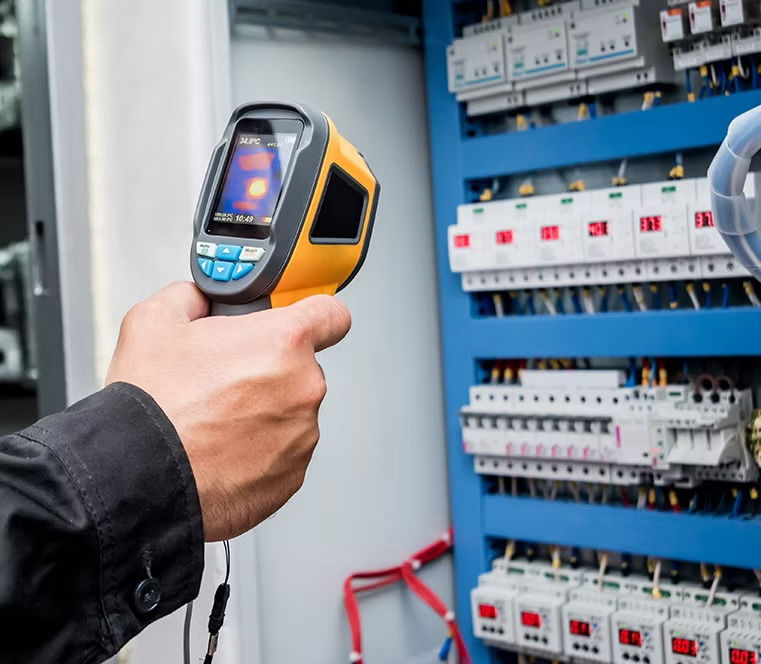
Top 10 Problems Infrared Thermography Detects Before They Cause Downtime

Updated: Apr 10
Unplanned downtime is one of the most expensive risks facing commercial and industrial facilities. Electrical failures, mechanical breakdowns, and hidden system defects often develop silently — until they escalate into outages, safety incidents, or costly emergency repairs.
This is why infrared thermography has become a cornerstone of predictive and condition-based maintenance programs. By identifying temperature anomalies early, facilities can address issues before they disrupt operations.
At Assured NDT, we perform professional infrared inspections nationwide to help facilities detect critical problems early, improve reliability, and meet NFPA 70B compliance requirements. Below are the top 10 infrared thermography problems we routinely detect before they cause downtime.
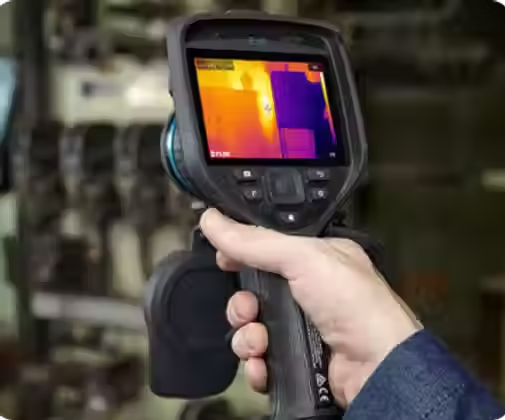
1. Loose or Deteriorating Electrical Connections
Loose connections are one of the most common — and dangerous — issues identified during infrared inspections.
Why It Matters
Increased resistance causes excessive heat
Leads to arcing, fires, and equipment failure
Often invisible during visual inspections
Infrared thermography identifies overheating terminations long before failure occurs.
2. Overloaded Circuits and Panels
As facilities add equipment, EV chargers, or new processes, electrical loads increase.
Why It Matters
Overloaded circuits overheat
Can trip breakers or damage insulation
Increase arc flash risk
Thermal imaging highlights uneven or excessive heating that signals overload conditions.
3. Failing Circuit Breakers and Fuses
Breakers are designed to protect equipment — but they can fail silently over time.
Why It Matters
Breakers may not trip when required
Creates significant fire and arc flash risk
Leads to cascading failures
Infrared thermography detects abnormal heat signatures that indicate internal breaker failure.
4. Phase Imbalance
Electrical phase imbalance occurs when loads are unevenly distributed.
Why It Matters
Causes overheating of conductors and motors
Reduces efficiency
Shortens equipment lifespan
Infrared inspections quickly reveal phase temperature differences that indicate imbalance.
5. Transformer Overheating
Transformers are critical — and expensive — assets.
Why It Matters
Overheating accelerates insulation breakdown
Can result in catastrophic failure
Leads to extended downtime
Thermal imaging identifies hotspots caused by overloads, cooling issues, or internal defects.
6. Motor and Bearing Failure
Motors drive production, HVAC, and critical processes.
Why It Matters
Bearing friction creates abnormal heat
Leads to sudden motor failure
Often missed until breakdown
Infrared thermography identifies early-stage bearing and winding issues.
7. HVAC Electrical and Mechanical Issues
HVAC systems operate continuously, especially in hot and humid climates.
Why It Matters
Electrical faults impact occupant comfort
HVAC downtime can halt operations
Failures increase energy costs
Thermal inspections detect overheating contactors, motors, and electrical components.
8. Insulation Breakdown
Electrical insulation degrades over time due to heat, moisture, and age.
Why It Matters
Leads to short circuits
Increases fire risk
Reduces system reliability
Infrared thermography detects heat patterns associated with insulation failure.
9. Moisture Intrusion in Electrical Equipment
Water and electricity are a dangerous combination.
Why It Matters
Causes corrosion and shorts
Accelerates electrical degradation
Can result from roof or conduit leaks
Infrared inspections reveal cooling effects and thermal anomalies caused by moisture.
10. Failing Connections in Switchgear and MCCs
Switchgear and motor control centers distribute power throughout facilities.
Why It Matters
Single failure can impact multiple systems
Creates widespread downtime
Increases arc flash exposure
Infrared thermography helps prioritize repairs before system-wide disruptions occur.
Why Infrared Thermography Prevents Downtime
Each of these infrared thermography problems develops gradually — and silently. Thermal imaging provides an early warning system that allows facilities to:
Schedule repairs during planned outages
Reduce emergency maintenance costs
Improve worker safety
Extend equipment lifespan
Support NFPA 70B compliance
Strengthen insurance risk profiles
Many facilities see a 5–10x return on investment from annual infrared inspections.
NFPA 70B and Annual Infrared Inspections
With the 2023 update to NFPA 70B, infrared thermography is now required at least annually for energized electrical equipment as part of a condition-based maintenance program.
Facilities must:
Perform inspections
Document findings
Track corrective actions
Use qualified thermographers
Assured NDT provides audit-ready reports aligned with NFPA 70B, OSHA, and insurance expectations.
Why Facilities Choose Assured NDT
Assured NDT delivers professional infrared thermography services nationwide, offering:
Certified thermographers
NFPA 70B-compliant inspection protocols
Clear severity rankings and repair priorities
Minimal operational disruption
Commercial, industrial, and critical facility expertise
We don’t just show heat — we deliver insight.
Detect Infrared Thermography Problems Before Downtime Occurs
If your facility relies on electrical reliability, infrared thermography should be a core part of your maintenance strategy.
📞 Contact Assured NDT to schedule an infrared inspection or consultation👉 www.assuredndt.com/contact
FAQs: Infrared Thermography Problems
1. What types of problems does infrared thermography detect?
Infrared thermography detects overheating electrical connections, overloaded circuits, failing breakers, motors, transformers, insulation breakdown, moisture intrusion, and phase imbalance.
2. Can infrared thermography prevent downtime?
Yes. By identifying problems early, facilities can schedule repairs before failures cause outages or operational disruption.
3. Is infrared thermography required by NFPA 70B?
Yes. NFPA 70B requires annual infrared inspections for energized electrical equipment as part of a condition-based maintenance program.
4. Can inspections be performed without shutting down equipment?
Yes. Infrared thermography is non-contact and performed while equipment remains energized.
5. Who is qualified to perform infrared thermography inspections?
Certified thermographers using calibrated equipment, as required by NFPA 70B.