
What Is Infrared Thermography?

Updated: Oct 23, 2025
Understanding Infrared Thermography
Infrared thermography is a non-contact diagnostic technology that uses thermal imaging cameras to detect heat patterns and temperature variations across equipment, surfaces, or electrical components.
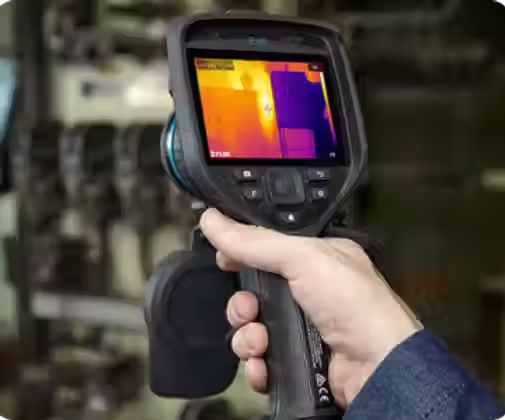
Every object emits infrared radiation—an invisible form of light that corresponds to its surface temperature. Infrared cameras capture this radiation and translate it into a thermal image (or “thermogram”), allowing technicians to see heat.
In industrial and commercial environments, this technology helps detect overheating components, insulation failures, leaks, and mechanical wear before they lead to costly downtime or safety hazards.
How Does Infrared Thermography Work?
Infrared thermography works by detecting infrared energy (heat) emitted by an object, converting it into an electronic signal, and producing a visual map of temperature distribution.
Key steps in the process include:
Image Capture: A thermographer uses a high-resolution infrared camera to scan electrical or mechanical equipment while it operates under normal load.
Temperature Mapping: The camera detects infrared radiation and assigns color values to represent different temperatures—hotter areas appear brighter or redder.
Analysis: Certified thermographers interpret the thermal images, identifying patterns that indicate potential issues like loose connections, overloads, or failed insulation.
Reporting: Findings are compiled into an actionable report that outlines the issue, its severity, and recommended corrective actions.
Applications of Infrared Thermography
Infrared thermography is used across many industries for predictive maintenance, safety, and quality control. Common applications include:
Electrical Systems: Detecting overheating conductors, loose terminations, or overloaded circuits.
Mechanical Systems: Identifying misalignment, friction, or bearing wear in motors and pumps.
Building Diagnostics: Locating insulation failures, roof leaks, or moisture intrusion.
Solar Energy Systems: Spotting defective PV cells or faulty wiring that impact power output.
Healthcare Facilities: Monitoring mission-critical electrical infrastructure to ensure patient safety.
Why Infrared Thermography Matters
Infrared thermography helps organizations:
Prevent costly downtime by identifying issues early.
Ensure safety and compliance with NFPA 70B and OSHA requirements.
Optimize maintenance programs by prioritizing repairs based on severity.
Reduce insurance risk with documented proof of proactive electrical maintenance.
Extend asset lifespan through targeted, data-driven interventions..
Why Choose Assured NDT?
As industry leaders in infrared thermography and non-destructive testing (NDT), Assured NDT delivers high-quality inspections backed by certified thermographers, clear reporting, and unmatched customer support. We serve commercial, industrial, and institutional clients
across the U.S.
At Assured NDT, we provide NFPA 70B-compliant infrared thermography inspections performed by certified thermographers. Our reports combine advanced analytics, clear visuals, and actionable insights—helping your facility maintain compliance, reduce risk, and operate safely.
Contact Assured NDT today to schedule your next infrared inspection and protect your facility from preventable failures.
Frequently Asked Questions: Infrared Thermography
1) What is infrared thermography used for?
Infrared thermography is used to detect hidden issues in electrical, mechanical, and building systems by visualizing heat patterns that indicate potential faults or inefficiencies.
2) How does infrared thermography help with maintenance?
It enables predictive maintenance by identifying problems before they cause equipment failure, allowing for scheduled repairs instead of emergency downtime.
3) Does infrared thermography require shutting down systems?
No. It’s a non-contact, non-invasive method performed while systems remain energized and operational.
4) Is infrared thermography required by NFPA 70B?
Yes. The NFPA 70B (2023) standard requires annual infrared inspections for energized electrical systems as part of a condition-based maintenance program.
5) Who should perform infrared thermography inspections?
Only certified Level II or Level III thermographers trained in electrical systems and thermal analysis should perform infrared inspections to ensure accuracy and compliance.
6) What are common issues detected with infrared thermography?
Thermal imaging commonly detects hot spots, loose connections, overloaded circuits, failing motors, and moisture infiltration—issues that often go unnoticed until they cause damage.
7) Why partner with Assured NDT for thermography?
Assured NDT provides professional, NFPA 70B-compliant inspections with clear reports, expert analysis, and recommendations that help you maintain safety, reliability, and compliance.
Ready to uncover hidden risks and improve building performance?Contact Assured NDT to schedule a thermal imaging inspection today.


