How to Build a Condition-Based Maintenance Program Under NFPA 70B

NFPA 70B (2023) transformed electrical maintenance across the United States by shifting from recommended practices to mandatory standards. One of the most significant updates is the requirement for facilities to adopt Condition-Based Maintenance (CBM) — a proactive approach that uses real-time diagnostics to assess the actual health of electrical equipment.
This means that organizations can no longer rely solely on time-based schedules or reactive repairs. Instead, they must use data-driven inspections, including infrared thermography, electrical testing, and non-destructive testing (NDT), to make informed maintenance decisions.
At Assured NDT, we help facilities nationwide build NFPA 70B–compliant CBM programs that reduce risk, enhance reliability, and improve safety. Below, we break down the essential steps for creating a compliant CBM program under the updated standard.

What Is Condition-Based Maintenance Under NFPA 70B?
Condition-based maintenance (CBM) is a maintenance strategy that uses measured equipment condition, rather than calendar-based intervals, to determine when maintenance should occur.
Under NFPA 70B, CBM requires:
Regular diagnostic inspections
Data collection and trend analysis
Documentation of equipment condition
Maintenance actions based on actual risk level
Use of qualified personnel and calibrated tools
Common CBM technologies include:
Infrared thermography (required annually)
Ultrasonic testing
Electrical testing
Vibration analysis
Transformer DGA testing
Motor circuit analysis
NFPA 70B’s intention is clear: maintenance should be proactive, not reactive.
How to Build a Condition-Based Maintenance Program Under NFPA 70B
Below are the essential steps every facility must follow to establish a compliant CBM program.
1. Establish an Electrical Asset Inventory
NFPA 70B requires a complete listing of all electrical equipment, including:
Panels and switchboards
Transformers
MCCs and drives
Breakers and fuses
Generators and ATS units
UPS systems
Motors
Distribution equipment
Each asset must be categorized by criticality, condition, and maintenance requirements.
2. Define Equipment Criticality Levels
Criticality determines inspection frequency and urgency.
NFPA 70B recommends ranking equipment based on:
Impact of failure
Safety risk
Downtime cost
Redundancy
Load importance
High-criticality assets require more frequent CBM inspections.
3. Implement Annual Infrared Thermography (Mandatory)
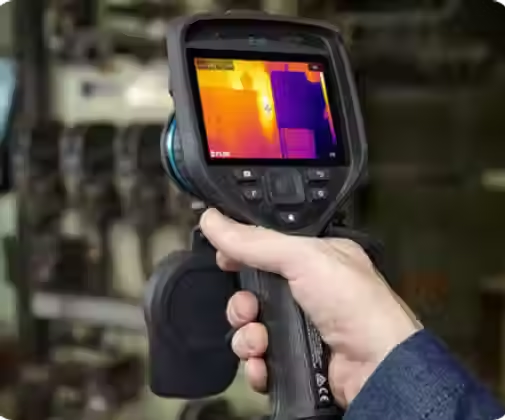
Infrared inspections are now required at least once per year for energized electrical systems.
IR thermography identifies:
Loose connections
Overheating conductors
Imbalanced loads
Insulation breakdown
Failing breakers, drives, and transformers
Assured NDT provides NFPA 70B–compliant thermography with Delta-T analysis, severity ratings, and detailed reporting.
4. Add Supporting Diagnostic Tests
A complete CBM program includes multiple diagnostic technologies.
Electrical Testing
Insulation resistance
Ground testing
Power quality analysis
Breaker performance testing
Mechanical/NDT Testing
Ultrasonic leak detection
Vibration analysis
Motor testing
Transformer DGA
These tests provide deeper insight into asset health.
5. Create a Condition Evaluation Framework
NFPA 70B requires a scoring system to evaluate equipment condition and determine maintenance priority.
A typical framework includes:
Normal – No action required
Degraded – Maintenance recommended
Serious – Immediate corrective action required
Critical – Remove from service or repair immediately
Assured NDT reports include severity categories tailored to NFPA 70B compliance.
6. Document All Inspection Findings
Documentation is now mandatory.
Your CBM documentation should include:
Inspection type and date
Equipment evaluated
Diagnostic tools used
Thermal images or test results
Severity ratings
Recommended corrective actions
Final disposition
This documentation is essential for audits, insurance, and compliance verification.
7. Trend Data Over Time
CBM is not a one-time activity — it requires tracking trends and comparing results year over year.
Trending helps facilities identify:
Recurring failures
Deteriorating conditions
Emerging risks
Seasonal or load-based behavior
This improves long-term planning and asset budgeting.
8. Train Personnel & Use Qualified Inspectors
NFPA 70B requires:
Certified thermographers (Level II or higher)
Qualified NDT technicians
Trained electrical workers
Documented competency
Assured NDT’s certified personnel ensure compliance and accurate data collection.
9. Integrate CBM into Maintenance Planning
Maintenance actions must now follow diagnostic findings — not assumptions.
This means:
Scheduling repairs based on severity
Using inspection data for budgeting
Coordinating CBM with outage planning
Prioritizing high-risk equipment
A compliant CBM program becomes the backbone of electrical reliability.
Why Partner With Assured NDT for NFPA 70B Compliance?
Assured NDT provides:
Certified thermographers
Nationwide NFPA 70B compliance support
Electrical testing & diagnostics
NDT services for mechanical and structural assets
Detailed, audit-ready reporting
Fast scheduling and minimal disruption
We help facility managers, engineers, and safety leaders transition smoothly to NFPA 70B’s new requirements.
Build a Compliant Condition-Based Maintenance Program Today
Assured NDT supports facilities across the U.S. with professional infrared thermography, electrical testing, NDT, and CBM program development.
📞 Schedule a consultation at assuredndt.com/contact
FAQs: How to Build a Condition-Based Maintenance Program Under NFPA 70B
1. What does NFPA 70B require for condition-based maintenance?
NFPA 70B requires annual electrical inspections, documented diagnostics, condition scoring, and maintenance actions based on actual equipment health.
2. Is infrared thermography mandatory under NFPA 70B?
Yes. Infrared thermography must be performed at least annually on energized electrical equipment.
3. What equipment needs to be included in a CBM program?
Panels, switchgear, transformers, MCCs, motors, drives, UPS systems, generators, and other critical electrical distribution components.
4. Who can perform NFPA 70B inspections?
Certified thermographers, qualified electrical professionals, and trained NDT technicians.
5. How often should CBM inspections occur?
Most facilities perform annual inspections, but high-criticality equipment may require more frequent diagnostics.