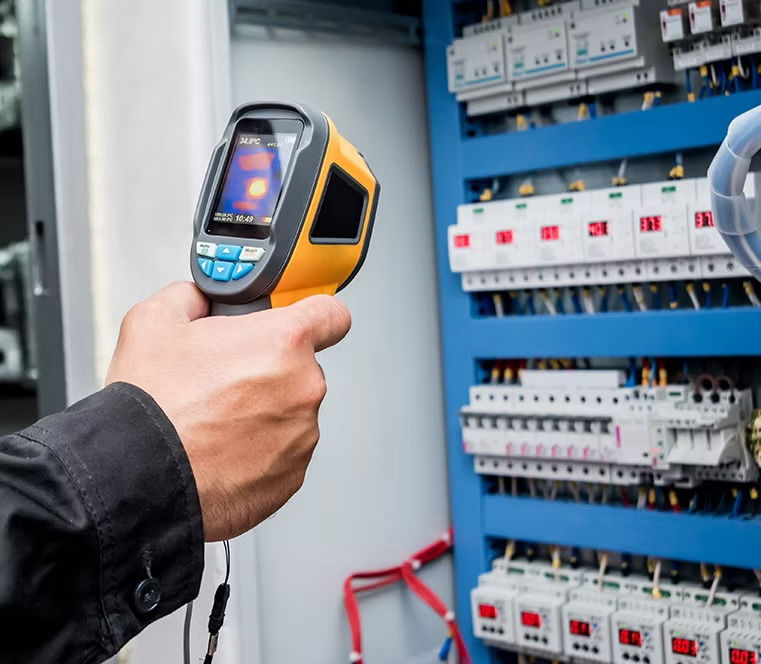
NFPA 70B 2023: How to Properly Document Thermography Inspection Findings

Updated: Apr 10
Why Documentation Defines Compliance Under NFPA 70B
Infrared thermography is now a required electrical maintenance practice under the 2023 NFPA 70B standard — but taking the images is only half the job.
To prove compliance, facilities must document, trend, and retain inspection data in a way that satisfies both NFPA and OSHA requirements. In other words, your infrared inspection is only as good as your documentation. Without accurate, traceable reports, even a well-executed inspection can fail an audit or insurance review.
At Assured NDT, we help facilities not just capture thermal data — but structure, classify, and preserve it to meet every detail of NFPA 70B Section 11.17 requirements.

The Role of Thermography Inspections in NFPA 70B
NFPA 70B 2023 officially made infrared thermography a required diagnostic method for all energized electrical equipment. These inspections detect early signs of:
Overheating conductors and terminations
Unbalanced loads or loose connections
Insulation breakdowns
Failing transformers or breakers
However, NFPA 70B also emphasizes that each finding must be quantified, classified, and documented with enough precision to guide corrective action and long-term asset management.
NFPA 70B Documentation Requirements for Thermography Inspections
The new NFPA 70B standard provides specific direction on what thermography inspection reports must include. Below is a breakdown of the key documentation elements your facility needs to capture for full compliance:
Equipment Identification
Each report must clearly identify the inspected component, including:
Equipment name and location
Voltage rating and circuit ID
Asset number or tag (if applicable)
Operating load or amperage at time of inspection
This ensures traceability and helps future inspections compare thermal trends accurately.
Thermographer Qualifications
NFPA 70B requires that inspections be performed by qualified, certified personnel — typically a Certified Thermographer.
The report must include:
Inspector’s name and certification level
Certification provider (e.g., Infraspection Institute, ITC, etc.)
Date of certification or renewal
This verifies that inspections were completed by trained experts using industry-approved techniques.
Imaging and Measurement Data
Every thermal finding should include:
A visual image of the equipment
A corresponding infrared image showing the thermal anomaly
Recorded temperature measurements (°C or °F)
ΔT (temperature differential) between the anomaly and reference
Load percentage during imaging
NFPA 70B stresses that these parameters be recorded accurately for repeatability and trending.
Severity Classification
To prioritize maintenance, NFPA 70B requires that findings be categorized by severity level.
Typical classifications include:
Critical: Immediate repair required
Serious: Schedule repair as soon as possible
Intermediate: Monitor and plan maintenance
Minor: No immediate action required; recheck next cycle
At Assured NDT, each thermal exception is assigned a severity level with color-coded visuals and recommended corrective timelines.
Corrective Action Recommendations
Documentation should include clear, actionable guidance — not just temperature data.
Reports must identify:
The likely cause of the anomaly
The risk of continued operation
Suggested corrective actions (tightening, replacement, load balancing, etc.)
Recommended re-inspection interval
This ensures findings translate into measurable maintenance steps.
Trending and Historical Comparison
NFPA 70B requires ongoing trend analysis across inspection cycles.
That means comparing new thermal data to prior inspections to identify:
Worsening heat patterns
Stabilized or corrected conditions
Reoccurring faults in the same equipment
Assured NDT provides structured trend reports that visualize temperature changes year over year, helping engineers make informed reliability decisions.
Why Proper Documentation Protects You
Accurate thermography documentation provides more than compliance — it protects your organization from risk.
It serves as: ✅ Evidence for insurance claims following electrical losses ✅ Verification for OSHA or NFPA audits ✅ Historical record of equipment reliability ✅ Baseline data for predictive maintenance programs
Without proper reporting, your facility could face non-compliance penalties or invalidated insurance coverage — even if inspections were performed.
Assured NDT’s NFPA 70B-Compliant Thermography Reporting
Assured NDT’s documentation process is built to meet and exceed NFPA 70B Section 11.17.
Each report includes:
Thermal and visual imagery
ΔT and severity analysis
Equipment load and ID data
Qualified thermographer credentials
NIST-traceable calibration verification
Corrective action recommendations
Historical trending and summary tables
Our deliverables are audit-ready, easy to interpret, and formatted for integration into CMMS or facility record systems.
The Assured NDT Advantage
When you partner with Assured NDT, you get more than a thermography report — you get a compliance and reliability solution.
We help you: ✅ Satisfy NFPA 70B and OSHA requirements ✅ Pass insurance and AHJ audits with confidence ✅ Reduce downtime through early fault detection ✅ Simplify documentation for multi-facility portfolios
Our certified thermographers and reporting analysts ensure every inspection meets the highest standards of accuracy, traceability, and professionalism.
The Bottom Line: If It’s Not Documented, It Didn’t Happen
NFPA 70B 2023 makes one thing clear: “If it’s not documented, it’s not compliant.”
Infrared thermography provides the insight — but documentation provides the proof.
Let AssuredNDT handle both. Our certified inspections and detailed, audit-ready reports keep your electrical safety program compliant, traceable, and future-ready.
Schedule your NFPA 70B thermography inspection today. 🔗 www.assuredndt.com/contact
Frequently Asked Questions About NFPA 70B Thermography Documentation
1. What must be included in NFPA 70B thermography reports?
Reports must include visual and thermal images, temperature readings, ΔT, load data, severity ratings, corrective recommendations, and thermographer credentials.
2. Who can document thermography findings?
Only qualified thermographers (Level II or higher) trained in electrical inspections and reporting standards.
3. How long should thermography reports be retained?
NFPA 70B recommends retaining records for multiple inspection cycles to allow trending and compliance verification.
4. How often should trending be reviewed?
Annually — and after any corrective maintenance or equipment modification.
5. How does Assured NDT ensure NFPA 70B compliance?
Assured NDT provides certified inspections, calibrated imaging, and NFPA 70B-compliant documentation formatted for audits, insurance reviews, and internal maintenance tracking.