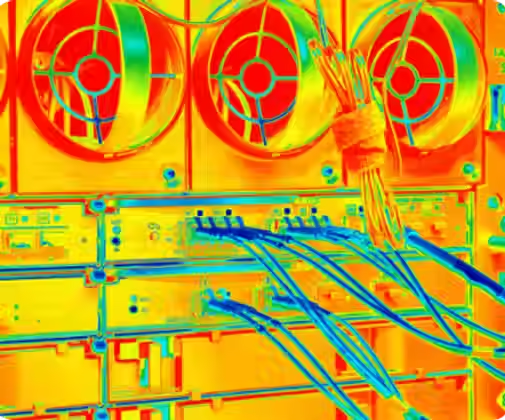
Infrared for Renewable Energy: Battery Storage, Solar, Microgrids

Renewable energy systems are transforming how facilities generate and store power. Solar arrays, battery energy storage systems (BESS), and microgrids are becoming common across commercial campuses, manufacturing plants, hospitals, universities, and utilities.
But while renewable infrastructure is innovative, it is not immune to failure.
In fact, renewable systems introduce new electrical complexities — high DC voltage, inverter systems, lithium-ion storage, grid interconnection components — all of which require proactive renewable energy maintenance to ensure safety, performance, and long-term asset value.
Infrared thermography has become one of the most effective tools for protecting renewable energy assets before small issues become catastrophic failures.
At Assured NDT, we help renewable energy operators nationwide detect hidden faults in solar, battery storage, and microgrid systems through professional infrared inspection services.

Why Renewable Energy Systems Require Proactive Maintenance
Renewable energy assets operate under unique stressors:
Continuous exposure to heat and UV radiation
Outdoor environmental conditions
High DC voltage systems
Battery thermal sensitivity
Complex inverter electronics
Grid interconnection variability
Even minor electrical degradation can lead to:
Reduced energy output
Inverter failure
Battery overheating
Fire risk
System shutdown
Lost production revenue
Renewable energy maintenance must prioritize early fault detection.
How Infrared Thermography Supports Renewable Energy Maintenance
Infrared thermography uses thermal imaging to detect abnormal heat patterns in energized equipment.
Heat is often the first indicator of developing failure.
In renewable systems, infrared inspections identify:
Overheating solar modules
Faulty panel connections
String-level imbalances
Failing inverters
Loose DC connectors
Transformer overheating
Battery cell temperature anomalies
High-resistance bus connections
Because inspections are non-contact and non-destructive, systems remain operational during evaluation.
Infrared for Solar Energy Systems
Solar photovoltaic (PV) systems can develop hidden issues that reduce output long before failure becomes visible.
Infrared inspections detect:
Hot spots in solar modules
Bypass diode failures
String-level performance discrepancies
Loose or corroded connections
Combiner box overheating
Inverter thermal issues
These issues may reduce efficiency by 5–20% or more if left unaddressed.
Routine infrared inspections help maximize production and protect return on investment.
Infrared for Battery Energy Storage Systems (BESS)
Battery storage introduces elevated thermal risk, particularly in lithium-ion systems.
Infrared renewable energy maintenance inspections can identify:
Uneven cell temperatures
Overheating busbars
Loose internal connections
Thermal runaway precursors
Inverter cabinet overheating
Cooling system failures
Early detection is critical, as battery failures can escalate rapidly.
Proactive infrared monitoring significantly reduces fire risk and insurance exposure.
Infrared for Microgrids & Distributed Energy Systems
Microgrids integrate:
Solar arrays
Battery storage
Generators
Switchgear
Protective relays
Load management systems
This interconnection increases complexity and fault potential.
Infrared inspections help ensure:
Proper breaker coordination
Transformer integrity
Balanced load distribution
Reliable switching operations
Stable power flow
Reliable microgrid performance depends on proactive maintenance.
Renewable Energy Maintenance & NFPA Compliance
As renewable systems expand, regulatory and insurance scrutiny increases.
Relevant standards include:
NFPA 70 (NEC)
NFPA 70B (electrical maintenance)
NFPA 855 (energy storage systems)
IEEE standards for electrical testing
The 2023 update to NFPA 70B requires annual infrared inspections of energized electrical equipment — including renewable energy infrastructure.
Insurance carriers are increasingly requesting documentation of maintenance and thermal inspections.
Infrared reports provide measurable proof of risk management.
The Financial Case for Infrared Renewable Energy Maintenance
Without proactive inspection:
Energy production declines unnoticed
Equipment failures increase
Downtime reduces revenue
Fire risk escalates
Insurance costs rise
With infrared maintenance:
✔ Optimized system efficiency
✔ Extended equipment lifespan
✔ Reduced failure risk
✔ Stronger insurance positioning
✔ Improved long-term ROI
Renewable systems are capital-intensive assets. Protecting them is essential.
Why Renewable Operators Choose Assured NDT
Assured NDT provides:
Certified Level II & Level III thermographers
Experience in solar, BESS, and microgrid systems
NFPA-aligned inspection protocols
Insurance-ready reporting
Flexible scheduling
Nationwide service coverage
We understand both the electrical complexity and financial stakes of renewable infrastructure.
Protect Your Renewable Energy Assets
If your facility relies on solar, battery storage, or microgrids, proactive renewable energy maintenance should include infrared thermography.
Contact Assured NDT to schedule a renewable energy infrared inspection👉 https://www.assuredndt.com/contact
FAQs: Renewable Energy Maintenance
1. Why is renewable energy maintenance important?
Renewable systems contain complex electrical components that can degrade over time. Proactive maintenance reduces fire risk, improves efficiency, and protects asset value.
2. How does infrared thermography help solar systems?
Infrared detects hot spots, faulty modules, inverter overheating, and loose connections before output declines or failure occurs.
3. Can infrared inspections detect battery storage issues?
Yes. Thermal imaging can identify uneven cell temperatures, overheating busbars, and cooling system problems that may lead to failure.
4. Are infrared inspections required for renewable systems?
NFPA 70B requires annual infrared inspections for energized electrical equipment, which includes renewable infrastructure components.
5. How often should renewable energy systems be inspected?
At minimum annually. High-value or high-risk installations may require more frequent inspections.