How Infrared Thermography Inspection Detects Roof Moisture Damage Before It Becomes a Costly Problem

Why Roof Moisture Inspections Matter
Commercial roofs are among the most expensive and overlooked assets in a facility. When moisture seeps beneath the membrane, it can silently degrade insulation, compromise structural integrity, and lead to costly leaks or interior damage. Unfortunately, by the time visible water stains appear, the problem has often spread far beyond the surface.
That’s where infrared thermography comes in — giving you the ability to detect roof moisture long before it becomes a financial or safety issue.
At Assured NDT, our ASNT certified thermographers use advanced infrared imaging to locate trapped moisture, insulation failure, and roof system weaknesses quickly, accurately, and without invasive testing.

What Is an Infrared Roof Moisture Inspection?
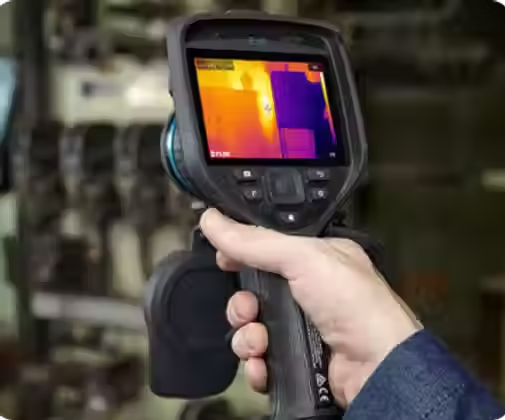
An infrared roof moisture inspection uses thermal imaging cameras to detect subtle temperature differences across the roof’s surface.
At night, when the roof begins to cool, areas containing trapped moisture retain heat longer than dry sections. This thermal signature allows certified thermographers to pinpoint water infiltration zones invisible to the naked eye.
Infrared roof scans can identify:
Trapped moisture in insulation or substrates
Leaks beneath roofing membranes
Delaminations and voids
Thermal bridging and heat loss points
Early-stage roof degradation
Infrared thermography provides non-invasive, real-time data that helps facility managers plan targeted repairs rather than full replacements.
How Infrared Thermography Works
The process relies on thermal dynamics. During the day, sunlight warms both dry and wet roof areas. After sunset, the wet areas — which hold more heat — cool down more slowly.
Using calibrated thermal cameras, our technicians capture these cooling patterns to map moisture presence.
Key steps in an Assured NDT roof moisture inspection include:
Pre-scan assessment of roof materials, weather, and layout
Thermal imaging conducted under ideal nighttime conditions
Moisture verification using non-destructive moisture meters
Comprehensive reporting with marked images and recommended corrective actions
This method is fast, accurate, and fully compliant with ASTM C1153 — the industry standard for using infrared thermography to detect moisture in roofing systems.
Benefits of Infrared Roof Moisture Inspections
When performed by a certified thermographer, infrared roof inspections offer measurable ROI through cost savings, safety improvements, and risk reduction.
Early Detection Saves Money
Identifying small wet areas before they expand can save tens of thousands of dollars in avoided structural repairs and insulation replacement.
Extend Roof Life
Regular IR inspections allow for targeted repairs, preventing premature roof replacement and extending lifespan by years.
Prevent Downtime and Disruption
Leaks and structural failures can shut down operations or cause equipment damage. Thermography prevents unexpected failures and business interruptions.
Support Insurance and Warranty Claims
Infrared inspection reports provide verifiable evidence of roof condition — often required for warranty validation or insurance claims.
Environmentally Responsible
By reducing full-roof tear-offs and material waste, thermography supports sustainable facility management and environmental stewardship.
Assured NDT’s Infrared Roof Inspection Process
Our approach blends advanced thermal imaging with real-world facility experience.
We use high-resolution, calibrated IR cameras and proven methodologies to deliver actionable insights, not just colorful images.
Each report includes:
✅ Thermographic and visual imagery
✅ Clear annotation of moisture-affected areas
✅ Verified moisture readings
✅ Repair prioritization by severity
✅ Preventive maintenance recommendations
All inspections are performed by ASTM Certified Thermographers, ensuring NFPA and ASTM compliance.
Who Benefits from Infrared Roof Inspections?
Infrared thermography is ideal for:
Commercial and industrial facilities
Hospitals and schools
Retail centers and warehouses
Property management and real estate firms
Insurance providers and adjusters
Whether you manage one site or a multi-building portfolio, infrared inspections help protect your investment and provide peace of mind.
The ROI of Preventive Roof Scanning
According to facility management data, every $1 spent on preventive roof maintenance saves $4–5 in reactive repair costs. Infrared thermography transforms roof maintenance from reactive guesswork to predictive asset management — ensuring decisions are backed by data, not assumptions.
Assured NDT: Certified Experts in Roof Thermography
Assured NDT’s team of certified thermographers and building inspection specialists have performed hundreds of roof moisture inspections across the U.S.
We combine technical expertise, calibrated imaging equipment, and NFPA/ASTM-compliant reporting to deliver results that stand up to engineering reviews, warranty claims, and insurance audits.
The Bottom Line: Don’t Wait for the Leak
Roof leaks don’t happen overnight — but they can cause catastrophic damage when ignored. Infrared thermography helps you find moisture before it finds you.
Contact Assured NDT today to schedule a certified infrared roof moisture inspection and protect your facility’s most valuable surface.
Frequently Asked Questions About Infrared Roof Moisture Inspections
1. How does infrared thermography detect roof moisture?
Infrared cameras detect temperature differences between wet and dry materials. Moist areas retain heat longer, creating thermal patterns that indicate trapped moisture.
2. When is the best time to perform a roof thermography inspection?
The best time is at night, following a sunny day, when the roof is cooling. This contrast enhances thermal differentiation.
3. Does the inspection require cutting into the roof?
No. Infrared thermography is non-invasive. Verification of anomalies can be performed with handheld moisture meters if needed.
4. How accurate is infrared roof moisture detection?
When conducted under proper conditions by a certified thermographer, accuracy exceeds 90–95%, making it one of the most reliable moisture detection methods available.
5. How often should infrared roof inspections be performed?
Most experts recommend annual infrared roof inspections, especially before and after severe weather seasons.
6. How does Assured NDT ensure reliable results?
Assured NDT uses calibrated thermal cameras, certified thermographers, and ASTM-compliant procedures to deliver verified, actionable reports with clear repair guidance.