Data Centers: How Infrared Inspections Prevent Failure and Downtime

Updated: Apr 10
In a data center environment, downtime is not an inconvenience — it’s a crisis. Even a brief outage can result in lost revenue, SLA penalties, reputational damage, and cascading system failures.
With dense electrical loads, continuous operation, and zero tolerance for disruption, data centers are among the most demanding facilities in the world. That’s why infrared inspections have become a critical component of data center reliability, safety, and compliance programs.
At Assured NDT, we perform professional data center infrared inspections nationwide, helping operators identify hidden electrical issues before they cause failures, outages, or safety incidents. This guide explains how infrared thermography protects data centers — and why it’s now essential.

Why Data Centers Are Uniquely Vulnerable to Electrical Failure
Data centers operate under extreme electrical conditions, including:
Continuous 24/7 electrical loads
High-density power distribution
Redundant but complex electrical architectures
UPS systems, generators, ATS units, and PDUs
Tight thermal margins
Zero tolerance for downtime
Even minor electrical issues can escalate quickly in this environment.
Common failure drivers include:
Loose electrical connections
Overloaded circuits
Phase imbalance
Failing breakers or bus connections
Transformer or UPS overheating
Degraded insulation
Most of these problems develop silently — until infrared inspections reveal them.
What Is a Data Center Infrared Inspection?
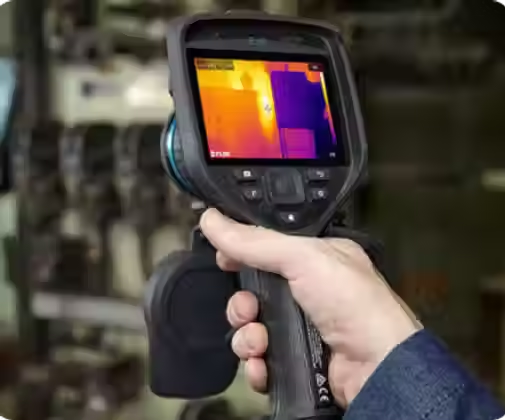
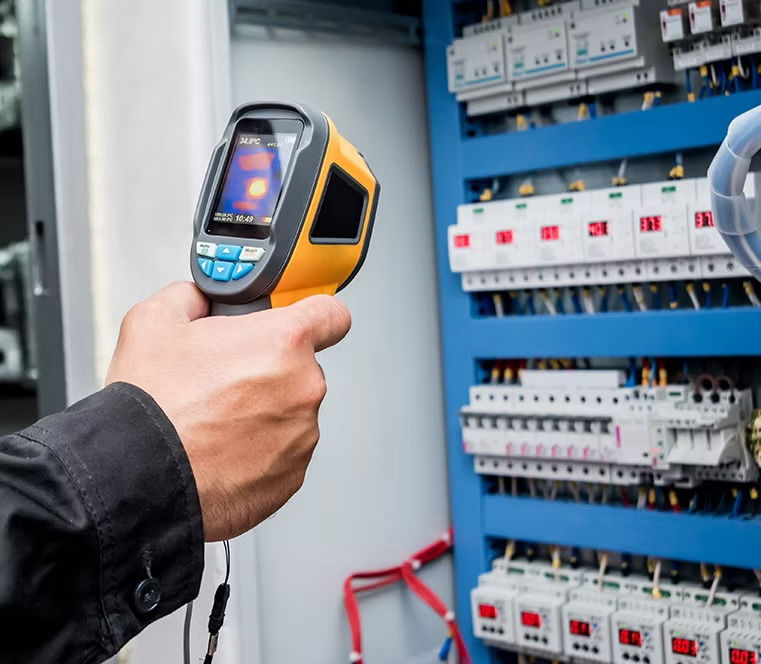
A data center infrared inspection uses thermal imaging cameras to detect abnormal heat patterns in energized electrical equipment.
Infrared thermography identifies early warning signs such as:
Excessive resistance
Load imbalance
Component degradation
Cooling or airflow deficiencies
Because inspections are non-contact and performed while systems remain energized, they can be completed without taking critical infrastructure offline.
Critical Data Center Systems Inspected with Infrared Thermography
A professional infrared inspection in a data center typically includes:
Switchgear and switchboards
Power Distribution Units (PDUs)
UPS systems and battery connections
Automatic Transfer Switches (ATS)
Transformers
Panelboards and breakers
Bus ducts and risers
Generator electrical connections
Mechanical and electrical interfaces
How Infrared Inspections Prevent Data Center Downtime
1. Identify Electrical Failures Before They Escalate
Loose connections and overloaded components generate heat long before failure occurs. Infrared inspections detect these issues early, allowing corrective action during planned maintenance windows.
2. Reduce Fire and Arc Flash Risk
Overheating electrical components significantly increase fire and arc flash hazards. Infrared thermography helps mitigate these risks by identifying unsafe conditions before they become incidents.
3. Support NFPA 70B Compliance
The 2023 update to NFPA 70B requires annual infrared inspections for energized electrical equipment as part of a condition-based maintenance program.
For data centers, compliance is not optional — it is expected by:
Insurers
Auditors
AHJs
Enterprise clients
4. Protect Redundancy Systems
Redundancy is only effective if every component functions properly. Infrared inspections verify the health of backup systems such as:
UPS equipment
Generators
Transfer switches
A failure in a redundant path can be catastrophic if undetected.
5. Improve Reliability Metrics
Regular infrared inspections support:
Higher uptime percentages
Reduced unplanned maintenance
Improved MTBF (Mean Time Between Failures)
Better predictive maintenance planning
Many data centers see significant ROI from infrared inspections by preventing a single outage.
How Often Should Data Centers Perform Infrared Inspections?
While annual inspections are the minimum requirement under NFPA 70B, many data centers perform inspections:
Semi-annually
Quarterly
After major load changes or expansions
Higher inspection frequency is justified by:
Continuous operation
High equipment criticality
Financial impact of downtime
Assured NDT helps data centers determine the right inspection frequency based on risk.
Infrared Inspections and Insurance Expectations
Insurance carriers increasingly expect data centers to demonstrate:
Proactive electrical risk management
Annual infrared inspection reports
Documented corrective actions
Trend data over time
Infrared inspections strengthen insurability and support favorable underwriting.
Why Data Centers Choose Assured NDT
Assured NDT understands the operational realities of data centers and mission-critical facilities.
We provide:
Certified thermographers
NFPA 70B-compliant inspection protocols
Experience in live, energized environments
Flexible scheduling (including nights and weekends)
Clear, actionable reporting
Nationwide service coverage
We inspect with precision, discretion, and zero disruption.
Prevent Data Center Downtime Before It Happens
If your data center depends on continuous uptime, infrared inspections are not optional — they are essential.
📞 Contact Assured NDT to schedule a data center infrared inspection👉 https://www.assuredndt.com/contact
FAQs: Data Center Infrared Inspection
1. What is a data center infrared inspection used for?
Infrared inspections detect overheating electrical components, load imbalance, failing connections, and equipment degradation before they cause outages or failures.
2. Are infrared inspections required for data centers?
Yes. NFPA 70B requires annual infrared inspections for energized electrical equipment, and insurers and auditors commonly expect compliance.
3. Can infrared inspections be performed without downtime?
Yes. Infrared inspections are non-contact and performed while systems remain energized, avoiding service interruption.
4. How often should data centers perform infrared inspections?
At minimum, annually. Many data centers perform semi-annual or quarterly inspections due to high criticality.
5. Who is qualified to perform data center infrared inspections?
Certified thermographers using calibrated equipment, as required by NFPA 70B.