White Paper: Safeguarding Healthcare Systems

Why Electrical Maintenance Programs Are Essential for Patient Safety and Compliance
By: Assured NDT

In modern healthcare environments, electrical reliability is patient safety. From
life-support systems and surgical suites to HVAC, imaging, and emergency
power, hospitals rely on uninterrupted electrical performance to save lives.
Yet across the U.S., many healthcare facilities still operate with reactive or
outdated maintenance practices, leaving them vulnerable to electrical
disturbances that can trigger unplanned outages, property damage, or even
regulatory penalties.
The High Stakes of Electrical Reliability in Healthcare Systems
Unlike most industries, healthcare cannot afford downtime. A power disturbance
doesn’t just halt operations, it can disrupt patient monitoring, critical
procedures, and life-sustaining systems.
Key areas of exposure include:
Operating Rooms: Interruptions to anesthesia, lighting, or sterilization
systems
Imaging Suites: MRI and CT systems damaged by voltage surges or power
loss
ICUs and Emergency Departments: Failure of ventilators, infusion pumps,
and telemetry systems
Laboratories and Pharmacies: Temperature-sensitive medications and
samples ruined by outages
Backup Power Systems: Generator or transfer switch failures during
emergencies
The consequences can be catastrophic — from patient injury and regulatory
action to loss of reputation and insurance coverage.
The New Standard: NFPA 70B (2023) & NFPA 9
The NFPA 70B (2023) standard has transformed electrical maintenance from
“recommended” to required. It mandates condition-based testing,
documentation, and qualified personnel for all energized equipment.
For healthcare facilities, this aligns directly with NFPA 99: Health Care Facilities
Code, which requires:
Preventive and predictive electrical maintenance programs
Periodic testing of life safety and critical branches
Documentation for AHJ and Joint Commission inspections
In short — compliance is no longer optional. Electrical maintenance is now a
core element of healthcare safety and accreditation.
Why Electrical Maintenance Programs (EMPs) Matter
A formal Electrical Maintenance Program (EMP) delivers measurable benefits
that go far beyond compliance:
Improved Patient Safety: Prevent electrical failures that can disrupt life-
critical care.
Regulatory & Insurance Compliance: Satisfy NFPA, OSHA, and Joint
Commission standards.
Reduced Downtime & Repair Costs: Detect issues early through predictive
maintenance.
Extended Asset Life: Optimize transformers, switchgear, and UPS system
longevity.
Audit-Ready Documentation: Simplify inspections and insurance reviews.
The Role of Predictive Maintenance in Safeguarding Healthcare Systems
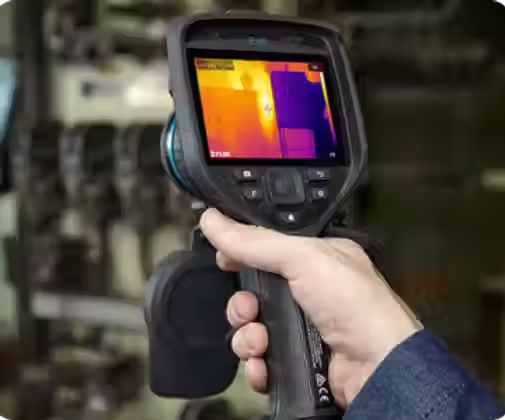
Predictive diagnostics are transforming healthcare maintenance strategies. Technologies like infrared thermography, ultrasonic testing, and breaker timing
analysis enable early fault detection — helping facility teams plan repairs
proactively, avoiding unexpected downtime during critical operations.
By analyzing data trends over time, healthcare engineers can move from
reactive fixes to data-driven maintenance cycles that enhance both reliability
and safety.
Why Partner with Assured NDT
Assured NDT specializes in electrical testing, inspection, and predictive
maintenance for hospitals and safeguarding healthcare systems nationwide.
Our certified experts deliver:
NFPA 70B- and NFPA 99-compliant inspections
Infrared thermography and condition-based diagnostics
Arc flash and breaker testing for critical systems
Detailed, audit-ready documentation
Minimal disruption to patient care operations
By aligning safety, reliability, and compliance, Assured NDT helps healthcare
facilities reduce risk — and protect what matters most: patients and people.
Download the full White Paper here: