Infrared Roof Moisture Scans: The Hidden Damage You Can’t See

Updated: Apr 10
Water intrusion is one of the most expensive and destructive problems facing commercial and industrial buildings — yet it often goes undetected until damage is extensive. By the time stains appear on ceilings or leaks reach occupied spaces, insulation, decking, and structural components may already be compromised.
That’s why infrared roof moisture scans have become an essential diagnostic tool for building owners, facility managers, and roofing professionals.
At Assured NDT, we perform professional infrared roof moisture inspections nationwide to help property owners identify hidden moisture early, minimize repair costs, and make informed roofing decisions. This guide explains how infrared scans work, what they detect, and why they’re critical for proactive building maintenance.

What Is an Infrared Roof Moisture Inspection?
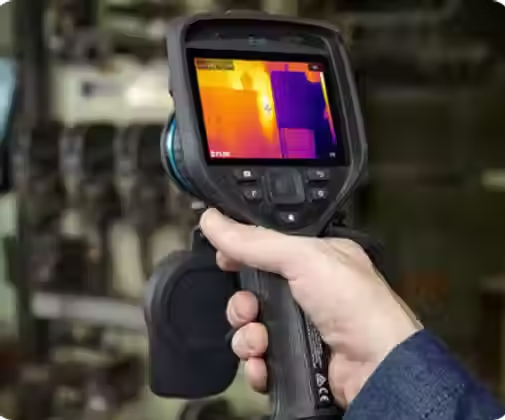
An infrared roof moisture inspection uses thermal imaging cameras to detect temperature differences across a roof surface. Moisture trapped within roofing systems retains heat longer than dry materials, creating identifiable thermal patterns.
Infrared scans allow inspectors to:
Identify areas of trapped moisture
Map the extent of water intrusion
Pinpoint compromised insulation
Detect hidden leaks not visible from the surface
Because the inspection is non-destructive, roofing systems remain intact — no core cuts or test holes are required during the scan.
Why Roof Moisture Is So Hard to Detect
Roof leaks and moisture intrusion often spread laterally beneath the membrane, meaning damage can occur far from the visible leak point.
Common reasons moisture remains hidden include:
Multi-layer roofing systems
Insulation that absorbs and traps water
Vapor barriers that conceal wet areas
Slow, intermittent leaks
Rooftop penetrations and flashing failures
Visual inspections alone often miss the full extent of damage. Infrared thermography reveals what the eye cannot see.
The Hidden Damage Infrared Roof Scans Reveal
1. Saturated Roof Insulation
Wet insulation loses its R-value, increasing energy costs and accelerating roof deterioration.
2. Deck Corrosion and Structural Degradation
Prolonged moisture exposure can lead to rust, rot, and weakened structural components — especially in metal or wood decking.
3. Mold and Mildew Growth
Moisture trapped within roofing systems creates ideal conditions for mold, which can impact indoor air quality and occupant health.
4. Compromised Roof Membranes
Water intrusion weakens membranes, seams, and adhesives, increasing the likelihood of widespread failure.
5. Accelerated Roof Aging
Even small moisture pockets dramatically shorten roof lifespan if left unaddressed.
When Should Building Owners Schedule Infrared Roof Moisture Scans?
Infrared roof moisture inspections are especially valuable when:
Roof leaks are suspected but not visible
Water stains appear inside the building
A roof warranty claim is being evaluated
Planning targeted roof repairs
Deciding between repair or replacement
Verifying contractor workmanship
Conducting due diligence during property acquisition
Preparing for insurance or capital planning
Many building owners perform scans annually or after major weather events.
Infrared Roof Moisture Inspection: Cost vs. Value
While costs vary by roof size and complexity, infrared roof moisture inspections typically range from:
Small commercial roofs: $1,500 – $2,500
Mid-size facilities: $2,500 – $5,000
Large or multi-roof campuses: $5,000+
The value far outweighs the cost:
Avoid unnecessary full roof replacement
Target repairs only where needed
Extend roof service life
Strengthen insurance documentation
Support warranty claims
A single avoided roof replacement can save hundreds of thousands of dollars.
Why Infrared Roof Scans Are Preferred
Traditional roof testing methods often require:
Core cuts
Test pits
Temporary roof penetrations
Infrared thermography provides:
Full-roof coverage
Fast results
No damage to roofing materials
Clear moisture mapping
This makes infrared inspections ideal for occupied buildings and sensitive facilities.
Why Building Owners Choose Assured NDT
Assured NDT delivers infrared roof moisture inspections with accuracy, professionalism, and actionable insight.
We offer:
Certified thermographers
Calibrated, high-resolution thermal cameras
Clear moisture maps and reporting
Repair prioritization guidance
Support for insurance and warranty documentation
Nationwide service coverage
Our reports help owners make confident, data-driven roofing decisions.
Detect Hidden Roof Damage Before It Gets Worse
If your building has an aging roof, unexplained leaks, or upcoming capital planning decisions, an infrared roof moisture inspection can provide clarity — before damage escalates.
Contact Assured NDT to schedule an infrared roof moisture scan👉 https://www.assuredndt.com/contact
FAQs: Infrared Roof Moisture Inspection
1. What does an infrared roof moisture inspection detect?
It detects trapped moisture beneath roofing membranes and insulation that is not visible during visual inspections.
2. Does infrared roof scanning damage the roof?
No. Infrared thermography is completely non-destructive and does not require roof penetrations.
3. When is the best time to perform an infrared roof scan?
Scans are most effective in the evening after solar loading, but can also be performed under proper conditions during cooler periods.
4. Can infrared roof scans be used for insurance or warranty claims?
Yes. Many insurers and manufacturers accept infrared reports as supporting documentation.
5. How often should roofs be scanned with infrared thermography?
Many building owners perform scans annually or after severe weather events.